

Casablanca transactions, Q3 2025
Quarter-on-quarter activity reported by Bank Al-Maghrib and ANCFCC.
Property buyers do not purchase a collection of wide-angle shots. They evaluate location, orientation, layout, materials, delivery confidence and lifestyle. Our production system makes those decisions easier to understand without disguising the reality of the asset.
Direct answer
Quarter-on-quarter activity reported by Bank Al-Maghrib and ANCFCC.
A reminder that demand and sales tempo vary sharply by city and quarter.
Casablanca-Settat, Rabat-Salé-Kénitra and Tanger-Tétouan-Al Hoceima generated roughly 58.5% of national GDP in 2023.
The Moroccan property market is not one homogeneous audience. Casablanca buyers may prioritise access, business districts and rental logic; Marrakech projects often sell a destination and hospitality-led lifestyle; Rabat communication can require institutional restraint; Tangier increasingly combines industrial, logistics, residential and international narratives. A generic luxury montage erases the reasons each project exists.
Official Q3 2025 figures illustrate the volatility of local activity: transactions rose quarter-on-quarter by 27.4% in Rabat, 23.7% in Casablanca and 19.4% in Tangier, while Marrakech was almost flat at -0.5%. These numbers are not a promise of future sales. They show why a developer needs content that can be adapted by city, product stage and buyer objection instead of one undifferentiated film.
Architectural imagery also carries an ethical obligation. Lens choice, staging and editing can clarify a space, but they should not manufacture impossible scale. The most persuasive work makes circulation, natural light, materials, views and neighbourhood context legible. When a project is off-plan, every future-state image, 3D integration or illustrative sequence should be clearly identified and aligned with approved project information.
Decision system
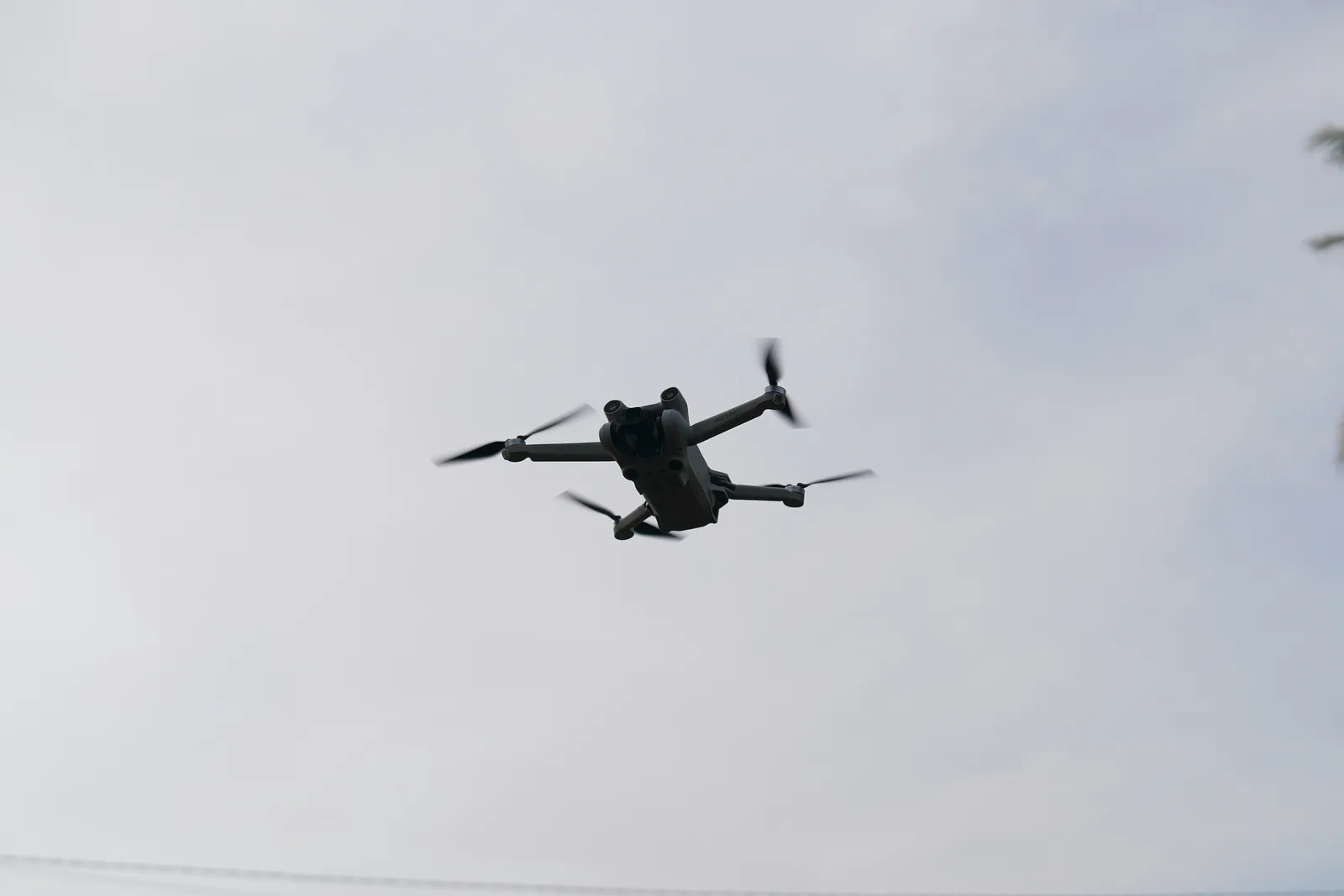
Show the relationship between the project and useful anchors: roads, business zones, coast, schools, transport or neighbourhood life. Aerials should explain geography, not merely add spectacle.
Use controlled movement and close detail to reveal façade rhythm, joinery, stone, wood, lighting and landscape design. Material credibility is built through texture and construction precision.
Demonstrate how rooms connect, where daylight enters and what the real view is. A walkthrough should answer circulation questions rather than racing through every room.
Include the people, amenities, progress, model apartment, delivery milestones or operating environment that support the sales claim. Each promise needs a visible or verifiable proof point.
An off-plan launch needs location, vision, 3D integration and trust. A completed property needs spatial proof. A construction update needs repeatable camera positions and dated milestones.
List unit types, price-driving differences, orientations, terraces, views and target profiles. This prevents the most expensive unit from becoming the misleading visual proxy for the whole project.
Agree which elements are completed, staged, simulated or future. Use on-screen labels where necessary and keep approved plans or specifications close to the creative team.
Scout compass orientation and reflected light. A two-hour shift can transform a façade or expose an empty view, so the schedule must follow the building rather than crew convenience.
Provide a master, unit clips, silent screen versions, vertical edits, agent-ready links and a named asset library. The sales team should find the right file in under 30 seconds.
Recommended asset system
These quantities are practical planning ranges. The final scope depends on objectives, locations, talent, operating constraints and rights.
| Deliverable | Planning range | Commercial role |
|---|---|---|
| Project launch film | 1 × 60–120 sec | Location, concept, architecture, amenities and call to action. |
| Unit walkthroughs | 2–4 × 30–75 sec | Priority typologies, model apartments or commercial spaces. |
| Vertical campaign edits | 6–10 × 8–20 sec | Hooks by view, layout, amenity, location and investment logic. |
| Architecture photography | 30–50 edited images | Exterior, interior, material, landscape, people and detail. |
| Aerial library | 8–15 selected shots | Access, neighbourhood, scale and site context, subject to permissions. |
| Progress-update template | 1 reusable format | Consistent monthly or milestone communication from fixed viewpoints. |
Moroccan operating realities
The message for Casablanca offices, a Marrakech residence, a Rabat institution or a Tangier industrial site should not be interchangeable. Local anchors and objections must appear in the brief.
Dust, unfinished access, protective coverings and active contractors affect filming. A readiness checklist 72 hours before the shoot can prevent an expensive day from becoming a clean-up exercise.
Bright Moroccan exteriors can create harsh contrast and empty midday courtyards. Early and late windows are essential; interiors may require controlled lighting to preserve window views.
Aerials can capture adjacent private spaces, sensitive sites or restricted zones. Coordinates, permissions, framing and data handling must be reviewed before flight.
Illustrative planning scenario
The project is nearing completion and needs launch content for direct sales, agents and social campaigns. The following is an illustrative production architecture, not a fixed quotation.
Week 1: project-document review, buyer objections, site scout and sun-path plan.
Shoot day 1: neighbourhood, access, façade, common areas and aerial window.
Shoot day 2: two representative units, material details, human scale and evening atmosphere.
Week 2: launch-film edit, photography, two typology walkthroughs and sales-team review.
Week 3: 8 vertical variations, silent-display version, subtitles and organised handover.
A coherent launch set could include 1 project film, 2 unit films, 8 vertical edits, 40 photographs, 10 aerial selects and a construction-completion update template. One approved claim sheet should govern every caption and edit.
Related capabilities
Official market figures were checked on 2 August 2026. The production frameworks, quantities and hypothetical scenarios are SQUADPROD planning recommendations and are not presented as public statistics, guaranteed outcomes or fixed prices.
FAQ